What pesticides actually cost
Told soberly rather than fearfully. Synthetic inputs strip soil life, run off into water, harm bees and birds, and leave residue on our food. We name the cost honestly, and then we turn straight to the hopeful answer.
They strip the life out of soil
A meta-analysis of nearly 400 studies found pesticides harmed soil invertebrates such as earthworms in 71 percent of cases, through death, reduced reproduction and impaired growth. As these soil engineers decline, the ground compacts, absorbs less water and holds less carbon.
See the evidence: Center for Biological Diversity (pesticides and soil health)They run off into water
When soil structure degrades and rain cannot soak in, pesticides move with the runoff into streams and groundwater, carrying the harm downstream to water quality and aquatic life.
See the evidence: Frontiers in Environmental Science (soil invertebrates review)They harm bees and the wider web of life
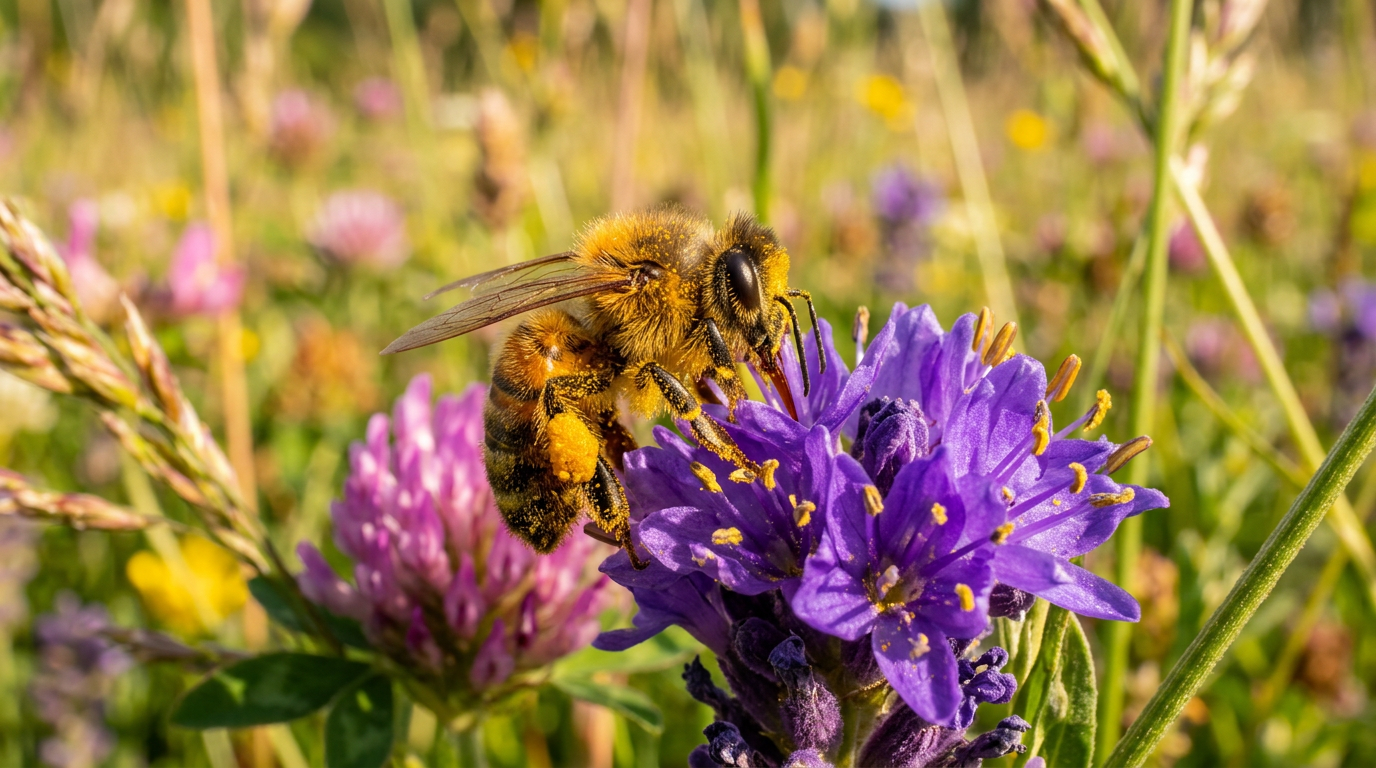
Systemic insecticides reach the pollen and nectar that pollinators depend on, and are linked to the decline of the wild bees that a third of our food quietly relies upon.
See the evidence: Nature Communications (neonicotinoids and wild bees)They leave residue on food, and questions on health
In 2015 the World Health Organization’s cancer agency classified the herbicide glyphosate as probably carcinogenic to humans, citing strong evidence of genotoxicity. It is one example of why residue on the food we eat deserves sober attention, not panic.
See the evidence: International Agency for Research on Cancer (IARC)Read further, from credible sources
The hopeful answer is already in your hands.
Every one of these costs has a clean alternative that works. The swap guide names the chemical and its natural replacement, one for one.
Go to the swap guideMore from Organic by Design
Each part stands on its own. Explore whichever one you need next.
The science that stands beside it
Strong, sourced research on living soil, drought resilience and pollinators, standing next to the faith claim and never over it.
Read the scienceDitch the chemical, grow it God's way
A searchable swap guide naming every common synthetic and its natural alternative, with a plain note on how to use it.
Open the swap guideSoil-health self-check
Answer a few gentle questions, choose your soil and region, get faith-framed next steps you can print, and ask the Storm Guide for a full plan.
Check my soilRegenerative practices library
Simple, proven ways to rebuild living soil at home, including the ancient Sabbath-year idea of resting the land.
Browse the library