Ditch the chemical, grow it God's way
A plain swap guide. For every common synthetic used in farming and the food industry, here is the natural alternative and exactly how to use it.
Search for a chemical you currently use, or filter by the kind of job it does. Each card shows the synthetic to leave behind, the natural replacement, and a clear note on how to put it to work in your own garden.
Ditch this
Synthetic NPK fertiliser (urea, ammonium nitrate, superphosphate)
Grow it God's way
Compost, aged manure and worm castings
How to use it
Feed the soil life instead of force-feeding the plant. Well-made compost releases balanced nutrients slowly and rebuilds the organic matter that holds them in place.
Ditch this
Quick-release nitrogen boosters
Grow it God's way
Nitrogen-fixing cover crops (clover, vetch, beans, peas)
How to use it
Legumes partner with soil bacteria to pull nitrogen from the air for free. Grow them, then cut and drop or turn them in to feed the next crop.
Ditch this
Glyphosate and other chemical herbicides
Grow it God's way
Mulch, hand weeding, no-dig beds and dense planting
How to use it
A thick mulch layer smothers most weeds before they start, keeps moisture in and feeds the soil as it breaks down. What little breaks through pulls out easily.
Ditch this
Neonicotinoid and broad-spectrum insecticides
Grow it God's way
Beneficial insects and companion planting
How to use it
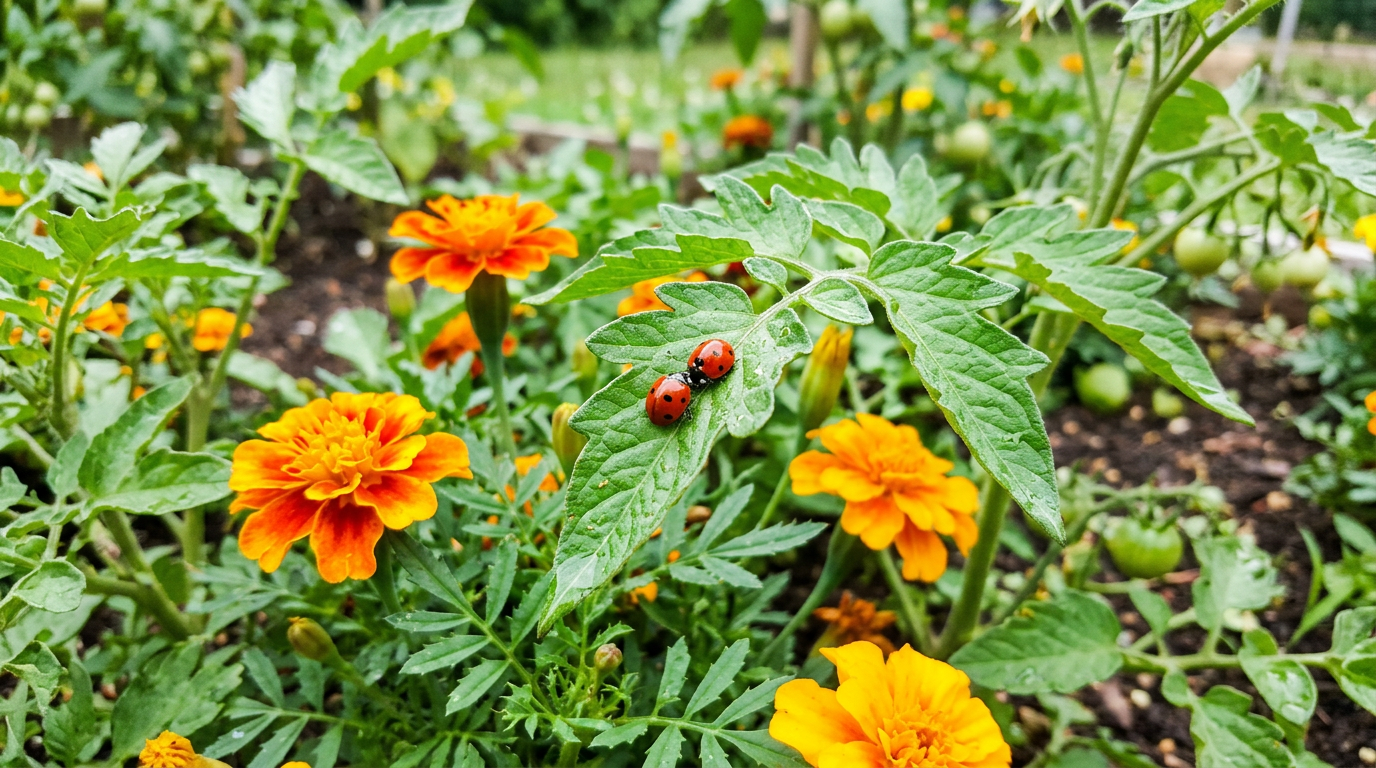
Ladybirds, lacewings and parasitic wasps eat the pests for you. Plant flowers and herbs that invite them in, and grow companions that confuse or repel the pests naturally.
Ditch this
Soil fumigants and nematicides
Grow it God's way
Crop rotation and cover crops
How to use it
Moving crops around each season breaks pest and disease cycles in the soil, so you never have to sterilise the ground to control what builds up under a single crop.
Ditch this
Synthetic fungicides
Grow it God's way
Airflow, resistant varieties and healthy soil biology
How to use it
Space plants for airflow, choose hardy heritage varieties, and keep the soil microbiome strong. A living soil suppresses many diseases on its own.
Ditch this
Chemical soil conditioners and wetting agents
Grow it God's way
Organic matter and mulch
How to use it
Compost and mulch do the same job the honest way, improving structure so the soil drinks in water and holds it through dry spells.
Ditch this
Chemical ripeners, waxes and synthetic preservatives
Grow it God's way
Right-time harvest, cool storage, drying, fermenting and canning
How to use it
Harvest at the proper stage and preserve with traditional methods. Food keeps beautifully without a coat of chemistry.
More from Organic by Design
Each part stands on its own. Explore whichever one you need next.
The science that stands beside it
Strong, sourced research on living soil, drought resilience and pollinators, standing next to the faith claim and never over it.
Read the scienceWhat pesticides actually cost
Told soberly: how synthetic inputs strip the soil, run off into water, harm bees and leave residue, paired at once with the hopeful answer.
Count the costSoil-health self-check
Answer a few gentle questions, choose your soil and region, get faith-framed next steps you can print, and ask the Storm Guide for a full plan.
Check my soilRegenerative practices library
Simple, proven ways to rebuild living soil at home, including the ancient Sabbath-year idea of resting the land.
Browse the library