The science that stands beside it
To be credible, the faith claim deserves real evidence standing beside it, cited plainly. We do not use science to prove the Bible, for science is ever changing while the Word is not. We simply note, with gratitude, that the strong mainstream research keeps pointing the same direction.
A note on how we hold this: Scripture is our foundation, immutable and sure. Science is a gift for understanding creation, but it shifts as knowledge grows. So we let the evidence corroborate, never anchor, what we believe. Each finding below is presented plainly, with its source named, and never overstated.
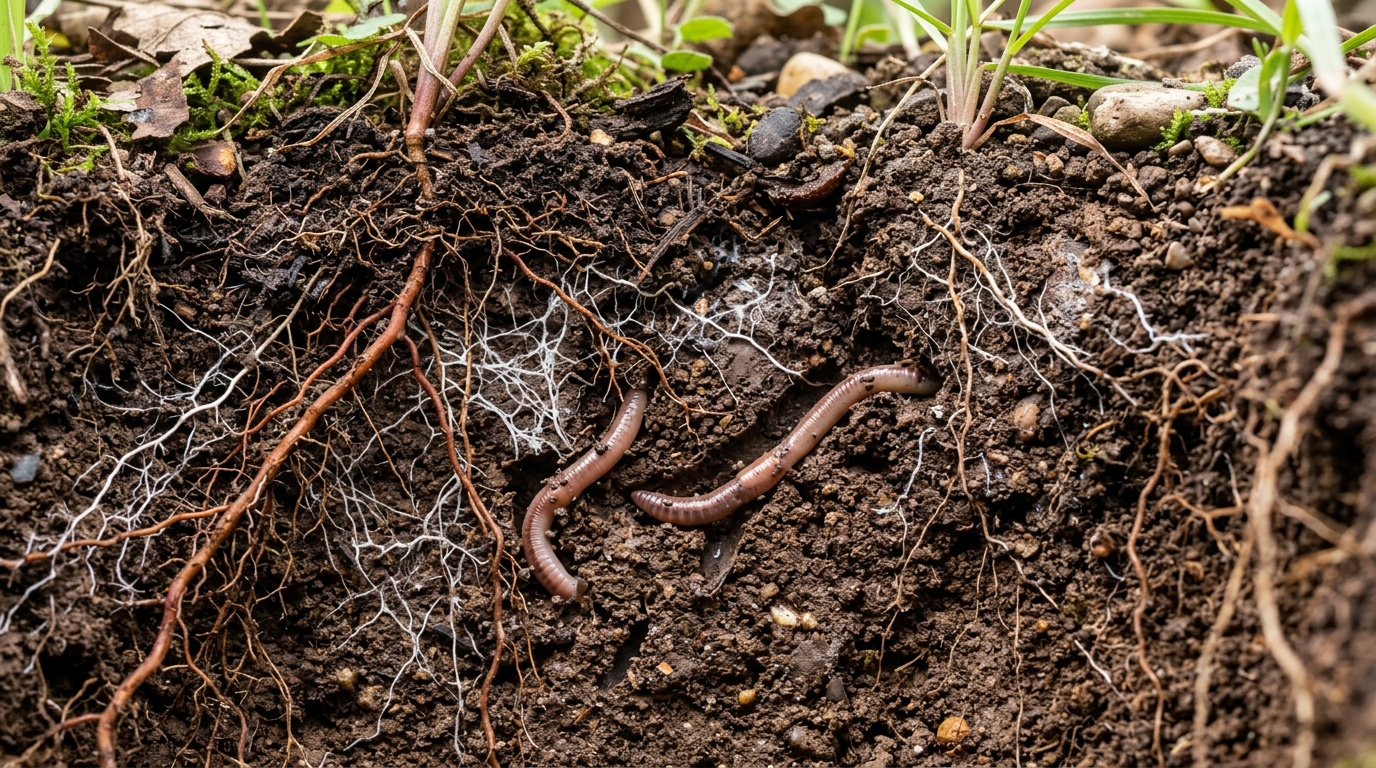
A living underground partnership feeds the plant
Mycorrhizal fungi form a symbiosis with plant roots, extending their reach for phosphorus, nitrogen and water in exchange for carbon. This same underground network helps suppress disease, cycle nutrients and hold soil together. Restoring a healthy native soil microbiome has been shown to increase plant biomass by roughly 64 percent on average.
Why is it so: New Phytologist (meta-analysis of soil microbiome restoration)Why living soil matters, in plain terms
The fungi, bacteria and invertebrates in healthy soil are what make nutrients available, build structure and store carbon. Feed that life and the ground works for you; sterilise it and you must replace every function with a purchased input.
Why is it so: Annual Review of Plant Biology (mycorrhizal symbiosis overview)Organic matched yields and did better in drought
A side-by-side trial running since 1981 found organic systems match conventional yields over time, and yield about 30 percent more corn in drought years because healthier soil holds water. The organic systems also built soil carbon and organic matter, while the conventional soil stayed largely unchanged.
Why is it so: Rodale Institute Farming Systems TrialA pesticide class linked to wild-bee decline
Neonicotinoid insecticides are absorbed into a plant and appear in its pollen and nectar, with sub-lethal effects on foraging, navigation and reproduction. An 18-year study across England linked neonicotinoid use on oilseed rape to increased wild-bee population extinctions, with foraging species about three times more affected.
Why is it so: Nature Communications (Woodcock et al.)Low-level exposure and children
A large body of peer-reviewed research associates prenatal exposure to organophosphate pesticides, even at levels too low to cause acute poisoning, with measurable effects on childhood neurodevelopment. Public-health authors call for reducing exposure and expanding non-toxic pest management.
Why is it so: PLOS Medicine (systematic review of organophosphates)More from Organic by Design
Each part stands on its own. Explore whichever one you need next.
What pesticides actually cost
Told soberly: how synthetic inputs strip the soil, run off into water, harm bees and leave residue, paired at once with the hopeful answer.
Count the costDitch the chemical, grow it God's way
A searchable swap guide naming every common synthetic and its natural alternative, with a plain note on how to use it.
Open the swap guideSoil-health self-check
Answer a few gentle questions, choose your soil and region, get faith-framed next steps you can print, and ask the Storm Guide for a full plan.
Check my soilRegenerative practices library
Simple, proven ways to rebuild living soil at home, including the ancient Sabbath-year idea of resting the land.
Browse the library