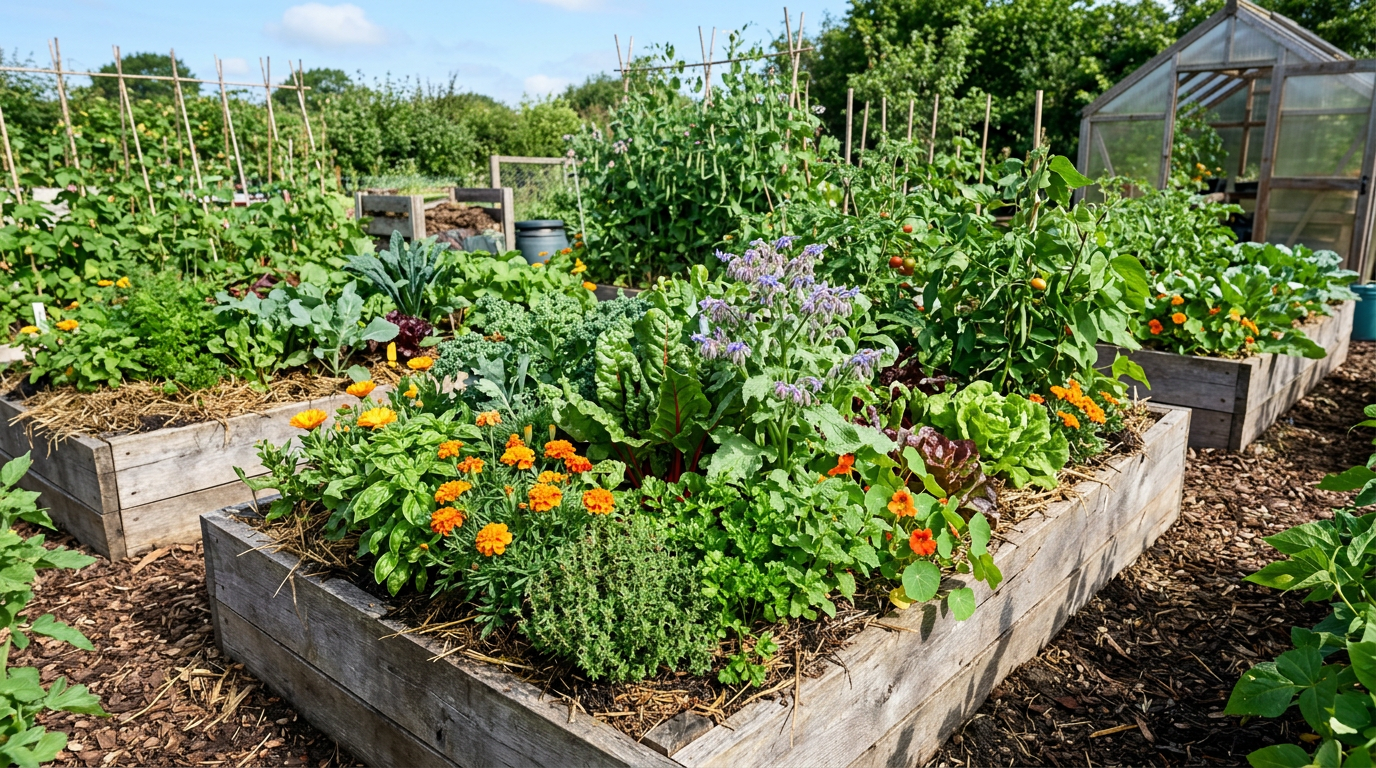
Regenerative practices library
Simple, proven ways to build living soil at home, including the ancient Sabbath-year idea of resting the land, scaled down to a single garden bed.
Composting
Turn kitchen and garden waste into dark, living soil food. Compost is the heart of growing God’s way, returning to the ground what the ground gave you.
- 1Layer greens (kitchen scraps, fresh clippings) with browns (dry leaves, straw, cardboard) in roughly equal parts.
- 2Keep it as damp as a wrung-out sponge and turn it every week or two for airflow.
- 3In a few months it becomes crumbly, sweet-smelling compost ready to feed your beds.
No-dig gardening
Stop turning the soil over and start building it up. Leaving the underground world intact protects the fungal networks and worm channels that do the work for you.
- 1Lay cardboard over grass or weeds to smother them without chemicals.
- 2Top with several inches of compost and plant straight into it.
- 3Add a fresh layer of compost or mulch each season and let the soil life pull it down.
Crop rotation
Move plant families around your beds each year so pests and diseases never settle, and each crop leaves the soil ready for the next.
- 1Group crops by family (legumes, brassicas, roots, fruiting) and never grow the same family in the same bed two years running.
- 2Follow hungry feeders with soil-building legumes.
- 3Keep a simple map each year so you remember what grew where.
Cover cropping
Never leave soil bare. A living cover protects the ground, feeds the microbes and captures nitrogen until you are ready to plant again.
- 1Sow clover, vetch, rye or field beans on any bed that would otherwise sit empty.
- 2Let it grow, then cut it down before it seeds.
- 3Leave the roots in place and the top growth as mulch, or turn it in gently.
Land rest, the Sabbath-year idea at home
Borrow the ancient wisdom of Leviticus 25 and give a bed a season of rest. It is the oldest regenerative practice there is.
- 1Each year, choose one bed to rest rather than crop hard.
- 2Sow a rich cover crop or heap it with compost and mulch, and let the soil life recover.
- 3Return to it the following season and notice how it has come back stronger.
Leviticus 25:4
More from Organic by Design
Each part stands on its own. Explore whichever one you need next.
The science that stands beside it
Strong, sourced research on living soil, drought resilience and pollinators, standing next to the faith claim and never over it.
Read the scienceWhat pesticides actually cost
Told soberly: how synthetic inputs strip the soil, run off into water, harm bees and leave residue, paired at once with the hopeful answer.
Count the costDitch the chemical, grow it God's way
A searchable swap guide naming every common synthetic and its natural alternative, with a plain note on how to use it.
Open the swap guideSoil-health self-check
Answer a few gentle questions, choose your soil and region, get faith-framed next steps you can print, and ask the Storm Guide for a full plan.
Check my soil