What to Sow in February
Momentum builds — the propagator fills and the first hardy crops go under cover.
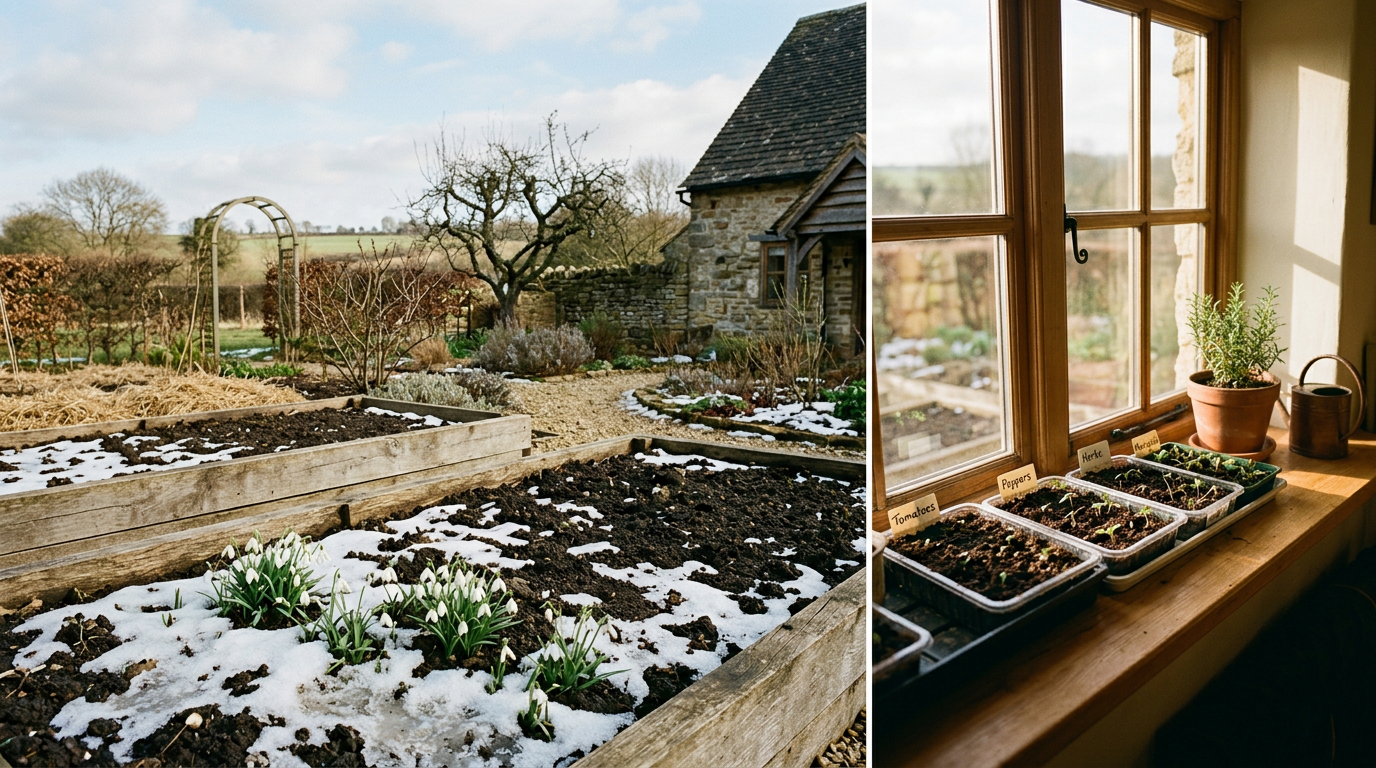
February brings a little more light and the season quickens. Most sowing is still indoors or under glass, but toward month’s end you can make the first protected outdoor sowings under cloches or in a cold frame where the soil has begun to warm.
Dates assume a temperate Central European climate. Warmer regions can sow a little earlier; colder or higher areas a little later. Ask a coach if you’d like advice for your own climate zone.
Start indoors / under cover
Tomatoes (for greenhouse)
VegetablesSow 0.5 cm deep at 18-21°C. Prick out into individual pots once the first true leaves appear. Only start this early if you can grow them under glass.
Aubergines
VegetablesSow 0.5 cm deep in a heated propagator at 21-25°C. Like peppers, they need a long, warm season.
Celery & celeriac
VegetablesSurface-sow onto moist compost and keep at 15-18°C; the fine seed needs light to germinate, so do not cover it.
Antirrhinum & lobelia
FlowersSurface-sow the fine seed and keep warm and bright for early summer bedding.
Sow direct outdoors
Broad beans (mild areas)
VegetablesIn sheltered gardens sow 5 cm deep under cloches once the soil is not frozen.
Spinach & early peas (under cloches)
VegetablesSow 2-3 cm deep under fleece or cloches on a warmed bed at the end of the month.
Tips for February
- Chit seed potatoes now: stand them eyes-up in a cool, bright, frost-free place to sprout before planting.
- Warm the soil with cloches for at least two weeks before any direct sowing.
- Sow little and often rather than everything at once — it spreads both the risk and the harvest.
Harvesting now
Purple sprouting broccoli, leeks, chard, and the first forced rhubarb.
Heritage Seeds Europe
Sowing this month? Find the seeds to plant.
Browse heirloom and open-pollinated varieties shared by growers across Europe, or list the seeds you are looking for. Free to join.