Your Bug-Out Bag
A ready-to-grab pack that carries your household through the first critical days if you ever have to leave home — built calmly and without weapons.
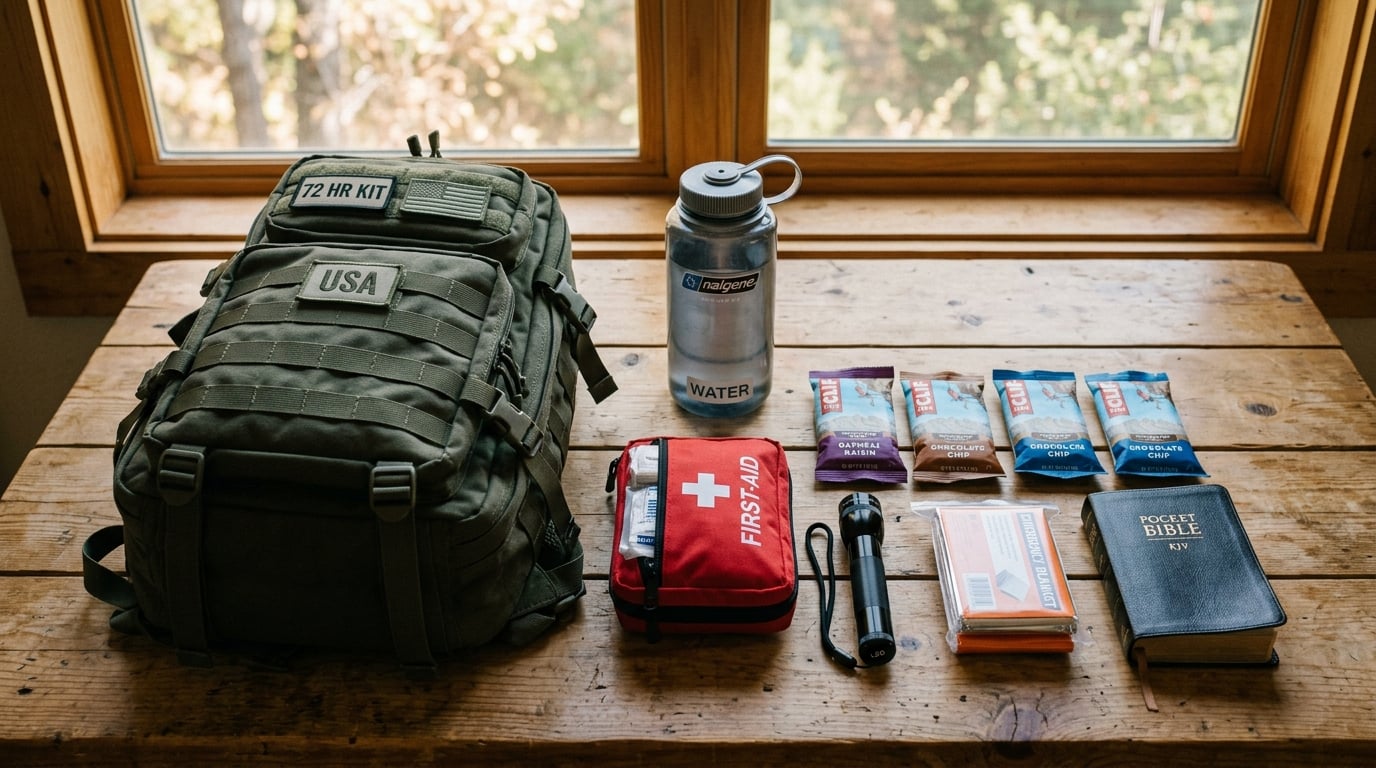
A bug-out bag is a single pack, ready at all times, that will carry you and your family through the first few days if you ever have to leave home quickly — because of fire, flood, storm, or another sudden emergency. It is not about fear or fantasy; it is about being able to move calmly when minutes matter.
Leaving home is always a last resort. In most situations the wiser course is to stay put with the supplies you have prepared. But a well-packed bag means that if you truly must go, you are not scrambling in the dark — you simply lift the pack and go.
At Prepared for the Storm we build these bags differently from much of the survival world. We carry no weapons. Our security rests in preparation, in community, in situational awareness, and above all in God. A calm, generous, well-prepared person is far safer than a frightened, well-armed one.
What you'll need
- A comfortable, rugged backpack you can carry for a distance
- Water: collapsible bottles plus a quality filter (such as a hollow-fiber straw filter) and purification tablets as backup
- Food: lightweight, shelf-stable, wholesome calories — dried fruit, nuts, nut butter, grain or ration bars
- A small stove option (fuel tabs or the ability to make a safe fire) and a metal cup for boiling
- Shelter & warmth: an emergency bivvy or compact tarp/tent, a wool blanket, paracord, and reliable fire starters
- Clothing: wool socks, a moisture-wicking layer, an insulated jacket, sturdy broken-in shoes, gloves and a hat
- First aid: a well-stocked kit with bandages, antiseptic, medical tape, and any personal medications
- Light & power: a headlamp, spare batteries, and a small solar or hand-crank charger
- Navigation & communication: a local paper map, a compass, a hand-crank radio, a whistle and a signal mirror
- Documents & means: waterproof copies of ID and medical info, some cash in small bills, and a written list of contacts
- A pocket Bible or printed psalms, and a small comfort item for each child
Step by step
- 1
Choose and fit the pack
Pick a backpack sturdy enough to survive hard use but light enough that every member of the family can carry their own. Fit and comfort matter more than size.
- 2
Cover water first
Water is the most urgent need. Pack a filter and purification tablets so you can safely drink from streams and taps along the way, not just what you can carry.
- 3
Add wholesome, no-cook food
Choose lightweight, nourishing foods that need little or no preparation — in keeping with our Food pillar, favor whole, plant-based calories over heavily processed “survival” fare.
- 4
Plan for warmth and shelter
Exposure is a greater danger than most people expect. A bivvy, a wool blanket, dry layers and a way to make fire keep you alive and clear-headed.
- 5
Prepare light, power and information
A headlamp, a small solar/crank charger and a hand-crank radio keep you oriented and informed when the grid is down — the calm that comes from information is a real form of safety.
- 6
Secure documents and provision
Waterproof your important papers, tuck away some small-bill cash, and keep a written contact list — identity and connection still matter when systems fail.
- 7
Add what feeds the soul
Include a compact Bible or printed psalms and a small comfort item for each child. In a frightening moment, a familiar promise and a familiar object steady the whole family.
- 8
Know it and keep it current
Store the bag where you can reach it in seconds. Review it twice a year — rotate food and water, check batteries, and update clothing for the season.
Safety first
A bug-out bag is a last resort, not a first plan. Know your local risks, have a family meeting point, and remember that staying home with good supplies is usually safer than leaving. We carry no weapons — our safety is in preparation, awareness, community and God.
How this fits the 5 Pillars
The bug-out bag draws together all five pillars in one pack — Water (filter and bottles), Food (wholesome no-cook calories), Energy (light, fire and charging), Country Living (shelter, navigation and practical skill), and Spiritual readiness (Scripture and the settled peace that carries a family through fear).
Spiritual reflection
We prepare the bag and we pray over it — then we set our trust not in the gear but in the Lord who is our refuge and strength, a very present help in trouble. Preparation is our part; peace is His gift.
“God is our refuge and strength, a very present help in trouble.”
Psalm 46:1
Share this article
Go deeper with the Academy
These guides are a taste of the full, structured path across all five pillars of preparedness.
Join the Academy